


5 Questions with Sentara's Katy Trapp on Safer Hospital Discharges
An Interview with Katy Trapp, Director of Ethics and Patient Rights at Sentara Health
A patient heading home from the hospital may have a new medication schedule to follow and a follow-up visit to arrange. Written discharge instructions help them manage that care at home, which makes having those instructions in a language they understand essential.
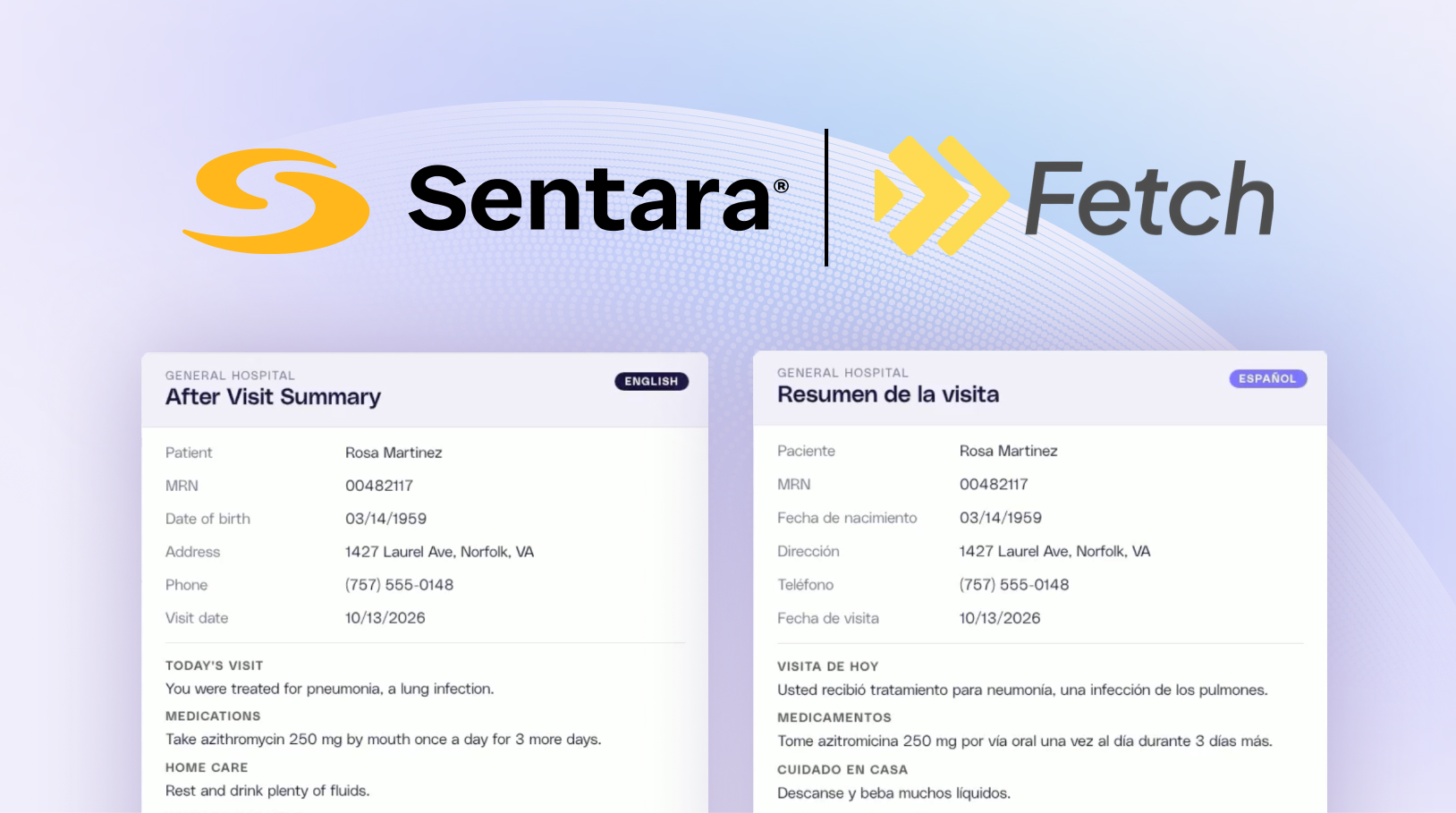
Commence and The Language Group (TLG) developed Fetch™ to help care teams provide human-reviewed translations of after-visit summaries (AVS) through their existing electronic health record workflows.
In this interview, Katy Trapp shares Sentara Health’s experience with Fetch and what timely translation means for patients, families, and staff.
The speed and ease of use are major benefits for our staff. By integrating Fetch into existing Epic workflows, it only takes an extra click or two and they receive a translated AVS in 15 minutes or less. That’s made a real difference in the discharge workflow.”
Katy Trapp – Director of Ethics and Patient Rights, Sentara Health
Q: Before Fetch, what were the biggest challenges with getting translated AVS or discharge instructions completed quickly enough during the discharge process?
A: Before Fetch, one of the biggest challenges was timing. Translated discharge instructions are important for patient understanding and safe follow-up care, but the discharge process often moves quickly. When translation depends on the availability of qualified internal staff or has to be sent out, it can create delays for the care team and for the patient.
For patients and families, waiting for translated instructions can add stress at a time when they are trying to get home and understand next steps. For staff, it can add another manual step to an already busy discharge workflow.
Fetch helps address that challenge by making the translation process faster and more accessible when it is needed.
Q: What difference can it make for patients and families when discharge instructions are available in their preferred language without creating a long delay before they can leave the hospital?
A: It can make a meaningful difference. Discharge instructions are often the information patients and families rely on once they leave the hospital. When that information is available in the patient’s preferred language, it supports better understanding of medications, follow-up appointments, warning signs, and what to do next.
Just as importantly, when those instructions can be provided without a long delay, the patient experience is better. Patients can leave with the information they need, in a language they understand, without feeling like language is creating another barrier at discharge.
Q: When you think about Fetch so far, what feels most helpful for Sentara: the speed, human-reviewed accuracy, Epic/AVS workflow integration, 24/7 availability, protection of patient information, or something else?
A: The speed and ease of use are major benefits for our staff. By integrating Fetch into existing Epic workflows, it only takes an extra click or two and they receive a translated AVS in 15 minutes or less. That’s made a real difference in the discharge workflow.
The other important piece is that Fetch is designed for the healthcare environment. It is not just a generic translation tool. The combination of speed, human-reviewed translation, patient information protection, and integration with Epic/AVS workflows makes it more practical for hospital use.
For Sentara, that matters because we need solutions that support both patient care and operational workflow. Fetch helps bring those pieces together.
Q: From your perspective as an ethics and patient rights leader, how does a faster, secure, and more reliable translation process support patient understanding, safe discharge, and equitable care?
A: Clear communication is central to patient rights and equitable care. Patients need to be able to understand their health information, ask questions, and participate in decisions about their care.
At discharge, that is especially important because patients are leaving the hospital with a lot of new information to remember. If their written instructions are delayed, incomplete, or not provided in a language the patient understands, that creates unnecessary risk and confusion.
A faster, secure, and reliable translation process supports safer discharge communication. It helps ensure patients and families have access to the information they need in a timely way, while also protecting their personal health information.
Q: What would you want ethics and patient rights leaders like you, as well as patient experience and language access teams, to understand about the Fetch advantage compared with slower manual, in-house, or outside translation workflows?
A: I would want them to understand that the advantage of Fetch is not just speed, although speed is very important. The advantage is that it helps make translated discharge instructions more realistic and reliable within the actual pace of hospital care.
In-house translation teams and outside translation workflows can be valuable, but they may not always be available quickly enough during discharge. Fetch gives hospitals a way to support language access without adding a long wait for patients or creating extra burden for staff.
For ethics, patient rights, patient experience, and language access teams, that is meaningful. It supports timely communication, protects patient information, and helps patients leave the hospital with instructions they can understand and use.